
Signs your wisdom teeth may need attention
Not every wisdom tooth needs to come out. Here's what to watch for and how the decision is made.
Watch for sore or swollen gums behind your back molars, pain when opening your jaw, a bad taste or smell, food trapping, or swelling in your cheek. These can mean a wisdom tooth is partly erupted, infected or pushing on nearby teeth. Wisdom teeth that are healthy, upright and easy to clean may not need removal.
What wisdom teeth are
Wisdom teeth are third molars, the last teeth at the back of each jaw. They usually come in between the late teens and mid-twenties. Some people have all four, some have fewer, and some have none.
Problems tend to start when there isn't enough room. A tooth may stay trapped in the bone (impacted), come in at an angle, or break through only partway, leaving a flap of gum where food and bacteria collect.
Symptoms to watch for
- Red, swollen or tender gum at the very back of the mouth
- Pain that spreads to the ear, jaw or side of the head
- Difficulty or discomfort opening your mouth fully
- A bad taste, bad breath or pus near a back tooth
- Food getting stuck behind your last molar
- Swelling in the cheek or under the jaw
- Pain or a cavity in the molar right in front of the wisdom tooth
How the decision is made
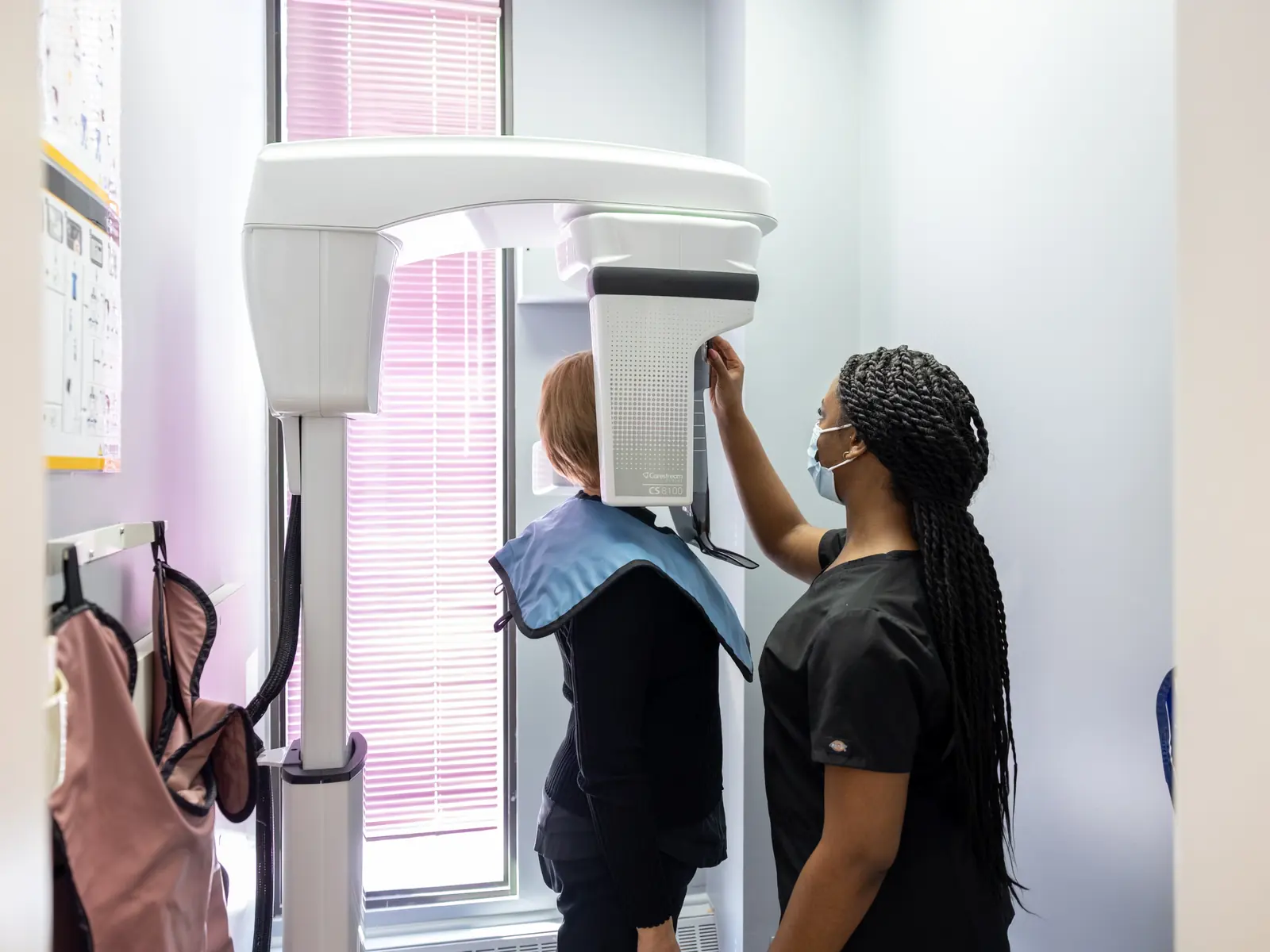
Your dentist looks at the area and takes an X-ray to see the position of the wisdom teeth, their roots, and how close they are to nerves and sinuses. They'll also consider your age, symptoms and how easy the teeth are to keep clean.
Removal is often recommended when a wisdom tooth keeps causing gum infections (pericoronitis), damages the neighbouring molar, develops decay that can't be repaired, or forms a cyst. A wisdom tooth with no symptoms that sits in a healthy position may simply be monitored at your regular exams.
Caring for wisdom teeth you keep
If your wisdom teeth are staying, they still need cleaning. Because they sit so far back, they're easy to miss. A small-headed or single-tuft toothbrush can reach behind the last molar, and angling the brush toward the cheek helps.
Keep up regular checkups and X-rays when the dentist recommends them. Changes such as a new cavity, a deepening gum pocket or a shift in position can happen without symptoms. If a flap of gum over a partly erupted tooth becomes sore, rinse with warm salt water after meals and call your dentist.
If removal is recommended
At our office, Dr. Maralani removes most wisdom teeth, including many impacted ones, whether they're under the gum or in the bone. She checks how complex your case is at an exam first, and refers you to an oral surgeon if that's the better choice.
Recovery usually involves some swelling and stiffness for a few days. You'll be given aftercare instructions covering bleeding control, pain relief, soft foods and how to avoid dry socket.
Frequently asked questions
Should wisdom teeth be removed before they cause problems?
Not always. Healthy, well-positioned wisdom teeth can stay. Your dentist will weigh the risks of removal against the likelihood of future trouble.
Is there a better age to have them out?
Recovery tends to be easier in younger adults, when roots are not fully formed and bone is less dense. That's one reason dentists keep an eye on them in the late teens.
What's dry socket?
It's a painful condition where the blood clot is lost from the extraction site. Avoiding smoking, straws and vigorous rinsing for the first few days lowers the risk.
What can I do for a sore wisdom tooth right now?
Rinse with warm salt water, brush the area gently and take an over-the-counter pain reliever as directed. Call your dentist, and seek urgent care if swelling spreads or you have trouble swallowing.
Related services
More patient guides
Trusted health information
General information only; not a substitute for an exam. Reviewed by Dr. Sayeh Maralani, DDS, general dentist. Last updated 2026-11-05.
Book your family's next visit
New patients welcome. We check your coverage before treatment.