
What causes bad breath, and what can you do about it?
Most bad breath starts in the mouth. Finding the source is the first step to getting rid of it.
Most bad breath comes from bacteria on the back of the tongue, between teeth and under the gums. These bacteria release sulphur compounds with a strong smell. Gum disease, dry mouth, cavities, smoking and certain foods make it worse. Daily brushing, flossing, tongue cleaning and regular cleanings fix most cases.
Causes inside the mouth
- A coated tongue, especially toward the back
- Food trapped between teeth or under loose fillings and crowns
- Gum disease, which creates pockets where bacteria thrive
- Untreated cavities or a tooth infection
- Dentures, retainers or aligners that are not cleaned daily
- Dry mouth, since saliva normally washes bacteria away
Causes from elsewhere
Garlic, onions, coffee and alcohol can change your breath for hours because their compounds pass through the blood to the lungs. Smoking and vaping leave their own odour and dry the mouth.
Less often, breath odour comes from sinus infections, tonsil stones, acid reflux, uncontrolled diabetes or kidney and liver conditions. If your dentist finds a healthy mouth, a visit with your family doctor may be the next step.
Some people notice a sour or metallic taste along with the odour. Low-carbohydrate diets can also cause a fruity or acetone-like smell as the body burns fat for fuel. This usually fades once the diet changes, and brushing won't fully remove it.
Daily habits that help
Small daily habits make the biggest difference. A tongue scraper takes only a few seconds and removes much of the coating where odour-causing bacteria live.
- Brush twice a day for two minutes with fluoride toothpaste
- Clean your tongue each morning with a scraper or your brush
- Floss or use interdental brushes once a day
- Drink water often, especially after coffee
- Chew sugar-free gum to keep saliva flowing
- Soak and brush removable appliances every day
How a dental visit helps
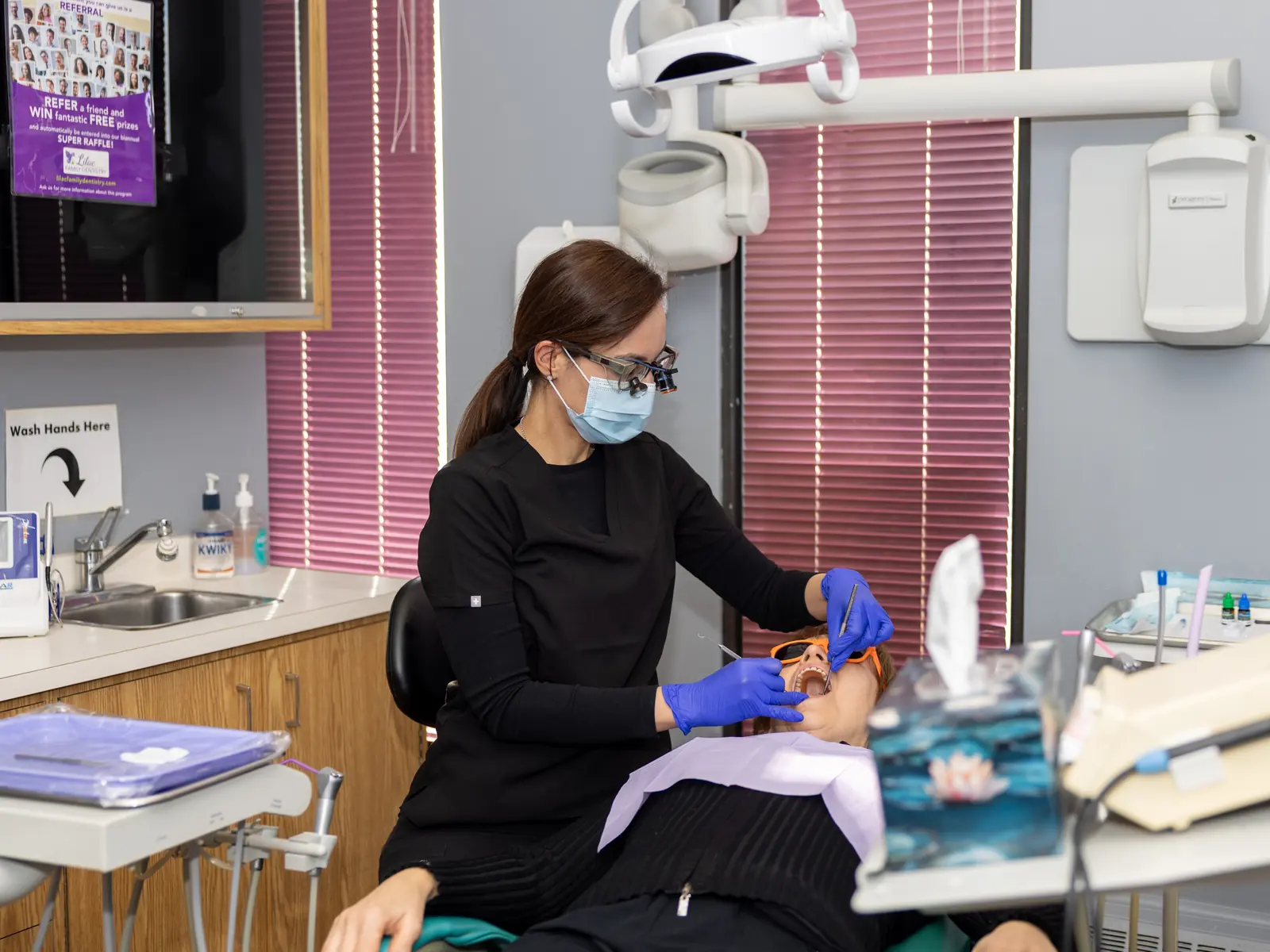
During an exam we check for gum pockets, decay and broken fillings that trap food. A professional cleaning removes hardened tartar that brushing can't reach. If gum disease is present, a deeper cleaning called scaling and root planing may be recommended.
Mouthwash can cover odour for a short time. It does not remove the source, so think of it as an extra step rather than a fix.
Tonsil stones are small, pale lumps of trapped debris in the crevices of the tonsils. They can smell strongly. Gargling with salt water may loosen them, and a family doctor or ear, nose and throat doctor can advise if they keep returning.
If you wear an appliance, smell it after a day of wear. A sour odour means it needs a better daily clean or a soak.
Frequently asked questions
How can I tell if I have bad breath?
Lick the inside of your wrist, let it dry for a few seconds and smell it. You can also ask a trusted family member.
Why is my breath worse in the morning?
Saliva flow drops while you sleep, so bacteria multiply overnight. Brushing and cleaning your tongue in the morning usually clears it.
Can bad breath be a sign of gum disease?
Yes. Breath odour that doesn't go away, along with bleeding or puffy gums, is a common early sign. Book an exam so it can be checked.
Do alcohol-based mouthwashes help?
They can dry the mouth, which may make breath worse later. An alcohol-free rinse is gentler if you like to use one.
Related services
More patient guides
Trusted health information
General information only; not a substitute for an exam. Reviewed by Dr. Sayeh Maralani, DDS, general dentist. Last updated 2026-11-03.
Book your family's next visit
New patients welcome. We check your coverage before treatment.