
Canker sore or cold sore: how to tell the difference
Both sting and both come back. The location, cause and contagiousness are quite different.
Canker sores appear inside the mouth, on the cheeks, tongue or inner lips, as round white or yellow ulcers with a red border. They aren't contagious. Cold sores are fluid-filled blisters, usually on the outside of the lips, caused by the herpes simplex virus, and they spread through close contact. Both usually heal within one to two weeks.
Side by side
- Location: canker sores sit on soft tissue inside the mouth; cold sores form on or around the outer lips
- Look: canker sores are shallow ulcers; cold sores start as clusters of small blisters that crust over
- Cause: canker sores have no single cause; cold sores come from a virus
- Contagious: canker sores are not; cold sores are, especially when blistered
- Warning: cold sores often tingle a day before they appear
What triggers canker sores
Canker sores, also called aphthous ulcers, often follow a small injury such as a cheek bite, a sharp chip or a scrape from a toothbrush. Stress, hormone changes, acidic or spicy foods and some toothpastes with sodium lauryl sulphate can trigger them. Frequent canker sores can sometimes be linked to low iron, vitamin B12 or folate, celiac disease or bowel conditions.
Canker sores come in three types. Minor sores are small and heal in about a week or two. Major sores are larger and deeper and can take several weeks. Herpetiform sores appear as clusters of tiny ulcers. Despite the name, herpetiform sores are not caused by the herpes virus.
What triggers cold sores
Once you've had the herpes simplex virus, it stays in the body. Sunlight, fever, a cold, fatigue, stress and dental work can trigger an outbreak. Wearing lip balm with sunscreen outdoors can reduce sun-related flare-ups.
A first cold sore infection in young children can look quite different. It may cause fever, irritability and many painful sores on the gums and inside the mouth. This is called primary herpetic gingivostomatitis and needs a doctor's assessment, especially if your child isn't drinking.
Easing the discomfort
- For canker sores: rinse with warm salt water, use an over-the-counter numbing gel and avoid crunchy, spicy or acidic foods
- For cold sores: start an antiviral cream or ask a pharmacist about antiviral tablets at the first tingle
- For both: keep the area clean and avoid picking
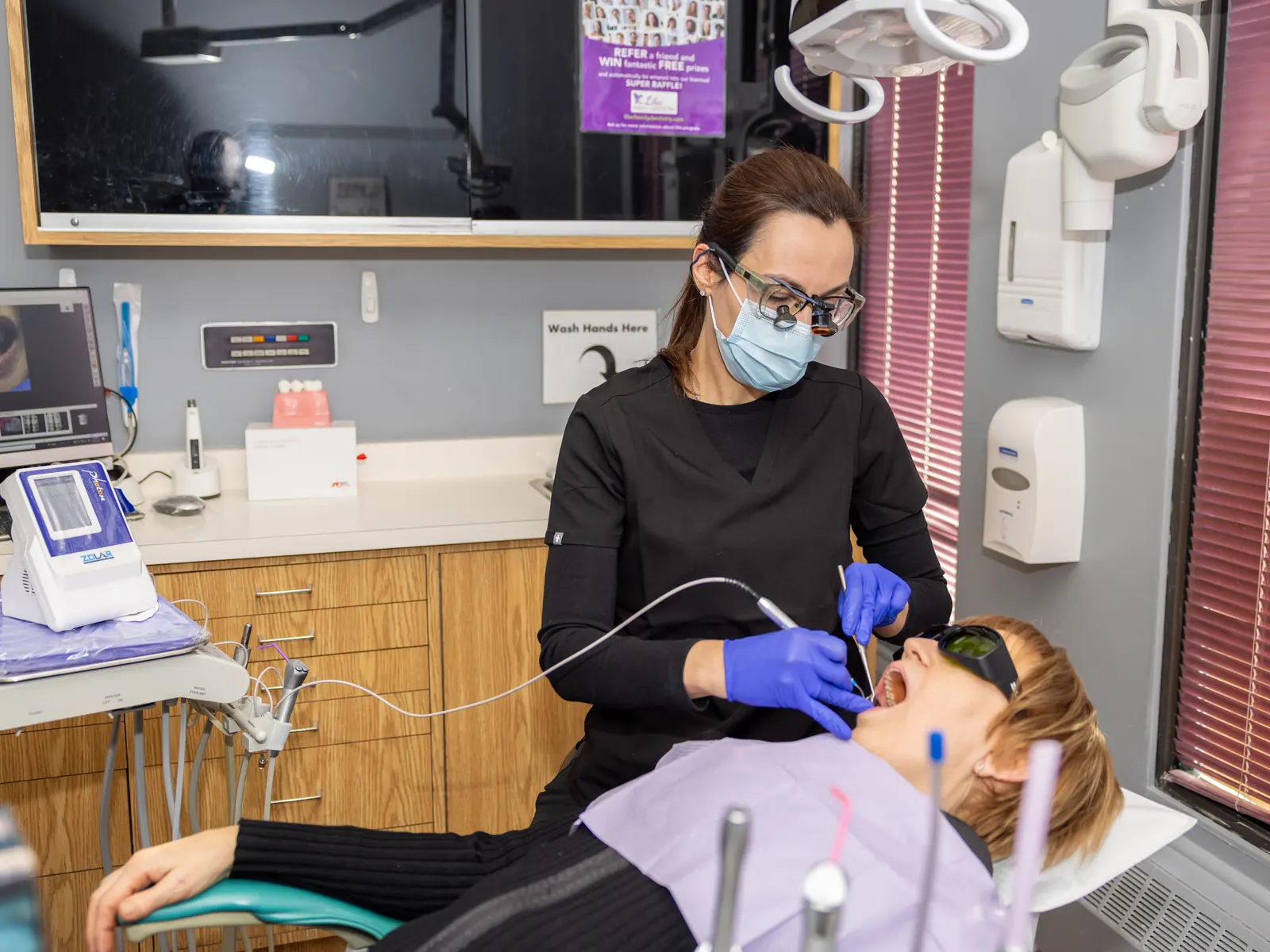
- Ask us about soft-tissue laser treatment, which some patients find eases pain and speeds healing
When to have a sore checked
Most sores clear up on their own. Book a visit if a sore is unusually large, very painful or keeps coming back, or if you have a fever with mouth sores. Any sore, lump or white or red patch that hasn't healed in two weeks should be examined to rule out other conditions, including oral cancer.
Frequently asked questions
Can I go to my dental appointment with a cold sore?
Call us first. An active cold sore can spread and stretching the lips can make it worse, so we may suggest rebooking unless the visit is urgent.
Can children get canker sores?
Yes. They are common in children and teens, often after a bite or scrape inside the mouth.
Are canker sores a sign of something serious?
Usually not. Frequent or very large sores are worth discussing with your dentist and doctor, who may check for nutritional or medical causes.
Do braces or dentures cause canker sores?
Rubbing from a sharp edge on an appliance or denture can trigger sores. Let us know so the edge can be smoothed or adjusted.
Related services
More patient guides
Trusted health information
General information only; not a substitute for an exam. Reviewed by Dr. Sayeh Maralani, DDS, general dentist. Last updated 2026-11-03.
Book your family's next visit
New patients welcome. We check your coverage before treatment.