
How often should you get your teeth cleaned?
Why the answer is different for each person, and how your dental team decides on your cleaning schedule.
Many people do well with a professional cleaning every six months. Some need visits every three or four months, for example if they have gum disease, build tartar quickly, smoke, have diabetes or wear braces or aligners. Others with very healthy gums may go longer. Your dentist and hygienist set the interval based on your mouth.
Why there is no single schedule
The six-month checkup is a familiar habit, and it suits a lot of people. Still, the right interval depends on how quickly plaque hardens into tartar in your mouth, the health of your gums, and your general health.
Tartar can only be removed with professional instruments. Brushing and flossing slow it down, but some build-up forms between visits for almost everyone. When tartar sits along the gumline for months, it irritates the gums and makes room for bacteria to settle deeper.
Your hygienist measures the small spaces between your gums and teeth at your visits. Those measurements, along with bleeding, tartar and X-rays when needed, guide how often you should come back.
Who may need cleanings more often
A shorter interval, such as every three or four months, is common for people in these situations:
- You've been treated for gum disease (periodontitis) and need ongoing maintenance
- You smoke, vape or use other tobacco products
- You have diabetes, which raises the risk of gum problems
- You're pregnant, when gums often become puffy and bleed more easily
- You wear clear aligners, a retainer or a partial denture that traps plaque
- You have dry mouth from medication
- You tend to build tartar quickly even with good home care
What happens at a cleaning visit
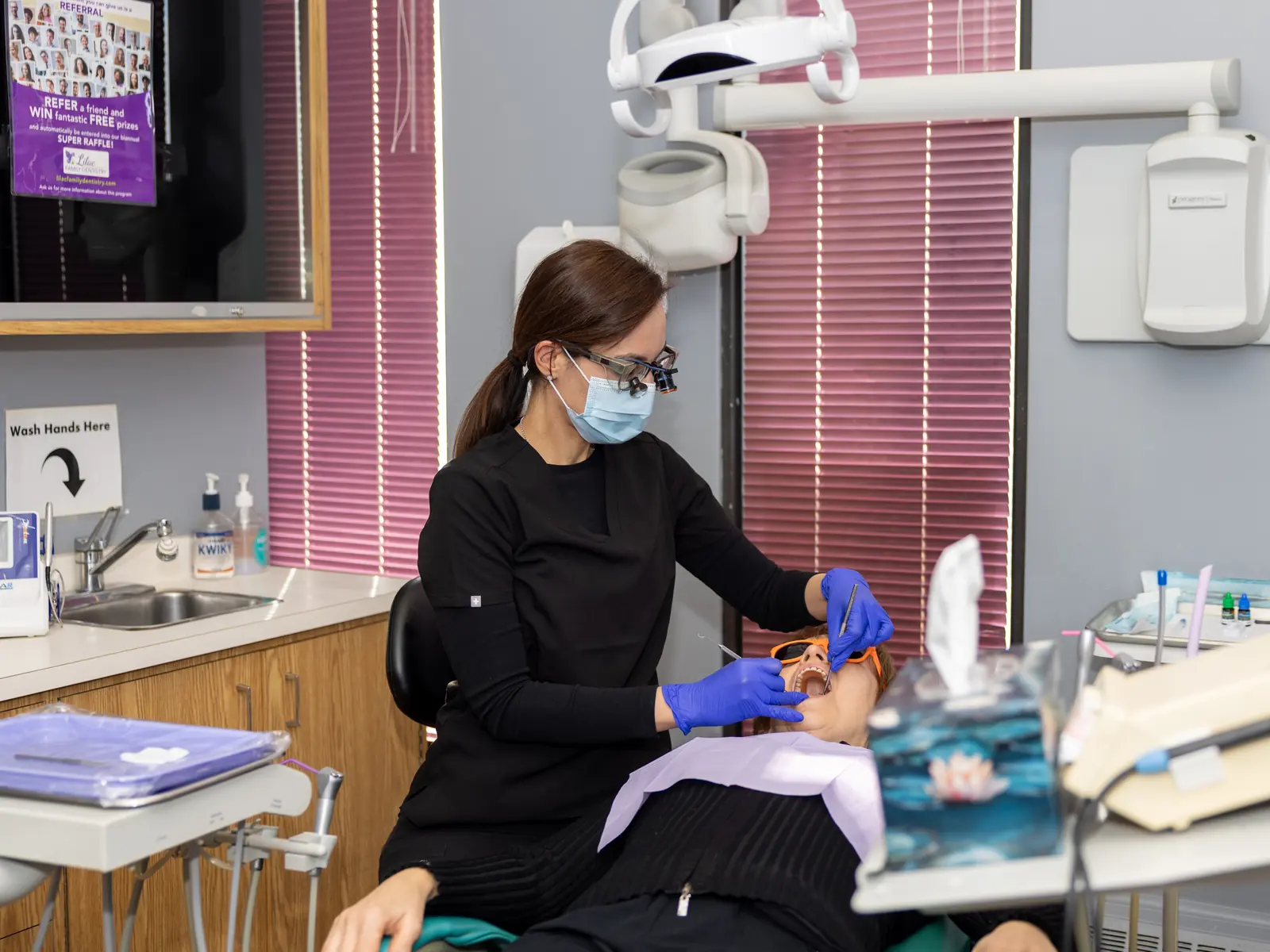
At our office, cleanings are done by our dental hygienists. A typical visit includes a review of your health history, a check of your gums, removal of tartar above and just below the gumline, polishing, and flossing. The dentist usually completes an exam at the same visit or at set intervals.
If gums are inflamed or pockets are deeper, the hygienist may suggest a deeper cleaning called scaling and root planing. This is often done one section of the mouth at a time, with freezing for comfort.
Cleanings for children and older adults
Children usually see the dentist and hygienist about every six months, starting by their first birthday. Their visits are shorter and focus on gentle polishing, fluoride and coaching on brushing. A child who gets cavities easily may be asked to come more often.
Older adults often benefit from closer follow-up too. Gum recession exposes root surfaces, many medications dry the mouth, and arthritis can make brushing harder. A shorter recall lets the hygienist remove build-up before it causes root decay or gum problems, and it's a chance to check dentures and the soft tissues of the mouth.
Making the time between visits count
- Brush twice a day for two minutes with a fluoride toothpaste
- Clean between your teeth once a day with floss, interdental brushes or a water flosser
- Replace your toothbrush or brush head every three months, or sooner if the bristles splay
- Limit sugary drinks and snacking between meals
- Book your next cleaning before you leave so it doesn't slip
Frequently asked questions
Does insurance cover two cleanings a year?
Many plans cover a set number of hygiene units or visits per year, and some cover more for people with gum disease. The details vary by plan. We can check your coverage before your visit.
Is a cleaning uncomfortable?
Most people feel some scraping and pressure. If your gums are tender or your teeth are sensitive, tell your hygienist. Freezing or a desensitizing gel can help.
Why do my gums bleed during a cleaning?
Bleeding is usually a sign of gum inflammation from plaque. It often improves within a couple of weeks of regular brushing and flossing. Bleeding that persists should be checked.
I haven't had a cleaning in years. Where do I start?
Book an exam and cleaning. The first appointment may focus on assessing your gums and teeth, and a full cleaning can take more than one visit if there's a lot of tartar.
Related services
More patient guides
Trusted health information
General information only; not a substitute for an exam. Reviewed by Dr. Sayeh Maralani, DDS, general dentist. Last updated 2026-11-03.
Book your family's next visit
New patients welcome. We check your coverage before treatment.