
How to floss the right way
Brushing cleans about three sides of each tooth. Cleaning between teeth reaches the rest.
Floss once a day using about 45 cm of floss. Wrap it around your middle fingers, slide it gently between two teeth, then curve it into a C shape against one tooth and move it up and down below the gumline. Repeat on the neighbouring tooth, using a fresh section each time. Light bleeding often stops within two weeks.
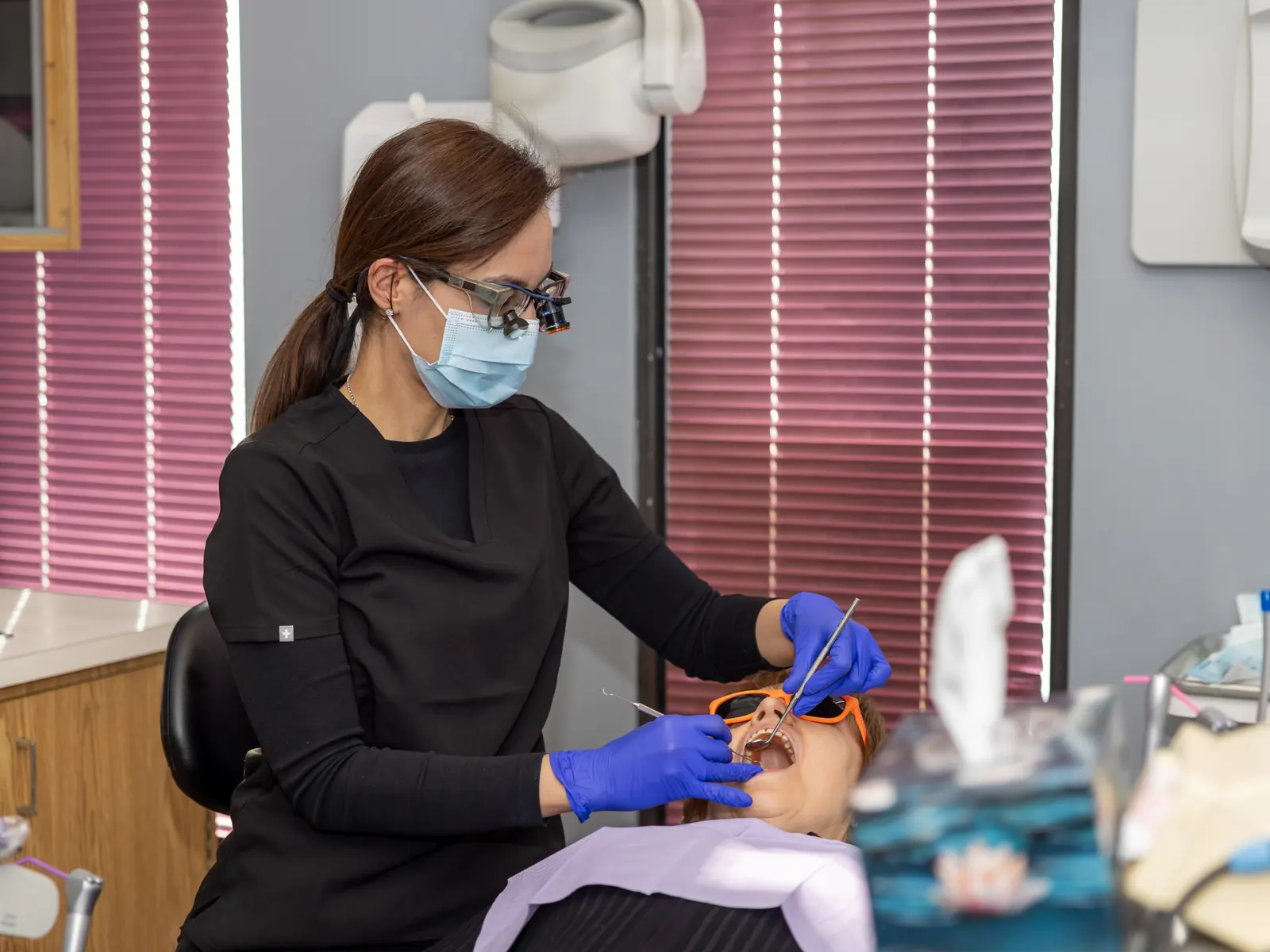
Why cleaning between teeth matters
Plaque that sits between teeth for more than a day or two starts to irritate the gums. Over time it hardens into tartar and can lead to cavities on the sides of teeth and to gum disease. A toothbrush can't reach these tight spaces, so a daily in-between clean fills the gap.
Floss also helps the dentist and hygienist. When the spaces between teeth are kept clean, there's less tartar to remove at your cleaning and less tenderness afterwards. People with crowns, bridges or implants need to clean these areas carefully, as the edges of restorations collect plaque easily.
Step by step
- Break off about 45 cm (18 inches) of floss
- Wind most of it around one middle finger and the rest around the other
- Hold a short length tight between your thumbs and index fingers
- Ease the floss between two teeth with a gentle back-and-forth motion; don't snap it down
- Curve it into a C around one tooth and slide it just under the gumline
- Move it up and down a few times, then curve it around the neighbouring tooth
- Unwind a clean section and move to the next space, including behind the last molars
Other tools that work
If string floss is hard to manage, there are good alternatives. The right tool is the one you'll use every day.
- Interdental brushes: small bristle brushes that fit between teeth, useful for wider gaps and bridges
- Floss picks: easy to hold with one hand, handy for children and on the go
- Water flossers: a stream of water that flushes debris, helpful around implants, aligner attachments and fixed retainers
- Floss threaders or super floss: for cleaning under bridges and permanent retainers
Common mistakes
If your floss keeps shredding in one spot, mention it at your next visit. A rough filling edge, chipped tooth or cavity can catch floss and may need attention.
- Snapping floss hard onto the gums, which can cut them
- Going straight up and down without hugging each tooth
- Skipping the back teeth
- Reusing the same dirty section of floss
- Stopping because the gums bleed
Bleeding gums and when to get help
Gums that bleed when you start flossing are usually inflamed from plaque. With gentle daily cleaning, the bleeding normally settles within one to two weeks. If it continues, or your gums are swollen, sore or pulling back, book a checkup. Your hygienist can measure the gum pockets and show you the right tool size for your spaces.
Frequently asked questions
Should I floss before or after brushing?
Either works. Flossing first can loosen debris so fluoride toothpaste reaches more surfaces, but the most important thing is doing it daily.
Is a water flosser as good as string floss?
For many people it's a helpful option, especially with implants, bridges or aligner attachments. Ask your hygienist whether it suits your mouth.
When should children start flossing?
Start once two teeth touch each other. A parent will need to do it until the child has the hand skills, often around age eight to ten.
Waxed or unwaxed floss: does it matter?
Both clean well. Waxed floss or tape slides more easily between tight contacts, while some people prefer the grip of unwaxed. Pick the one you find comfortable.
Related services
More patient guides
Trusted health information
General information only; not a substitute for an exam. Reviewed by Dr. Sayeh Maralani, DDS, general dentist. Last updated 2026-11-03.
Book your family's next visit
New patients welcome. We check your coverage before treatment.