
Veneers vs bonding: how they compare
Both can change the shape and colour of front teeth. They differ in material, preparation and how long they last.
Bonding adds tooth-coloured composite resin to fix small chips, gaps or uneven edges, usually in one visit with little or no drilling. Veneers cover the whole front of a tooth. Porcelain veneers resist staining and last longer but usually need some enamel removed. Composite veneers sit between the two in cost, durability and preparation.
What bonding is
Dental bonding uses composite resin, the same type of material used in white fillings. The dentist roughens the tooth surface slightly, applies the resin in layers, shapes it by hand, hardens it with a curing light and polishes it.
Bonding works well for a single chipped tooth, a small gap, a rough edge, or a patch of discolouration. Because it's added to the tooth, little or no natural enamel needs to be removed. It can usually be repaired or touched up later.
What veneers are
A veneer is a thin shell that covers the front surface of a tooth. Composite veneers are built directly on the tooth in the chair, often in one visit. Porcelain veneers, such as E.max, and zirconia veneers are made in a lab from a scan or impression and bonded on at a second visit.
Porcelain and zirconia veneers usually require a thin layer of enamel to be removed so they don't look bulky. That step is permanent, so the tooth will always need a covering afterward.
Comparing the options
- Typical use: bonding suits small fixes on one or two teeth; veneers suit changes to shape, colour and alignment across several teeth
- Visits: bonding and composite veneers are often done in one visit; porcelain usually takes two or more
- Tooth preparation: bonding needs little or none; porcelain usually needs some enamel removed
- Stain resistance: porcelain resists staining; composite can pick up stains from coffee, tea and red wine over time
- Lifespan: porcelain generally lasts longer; composite may need polishing, repair or replacement sooner
- Repairs: composite is easy to patch in the mouth; chipped porcelain often needs a new veneer
What the process looks like
For bonding or composite veneers, the visit usually starts with choosing a shade. The dentist cleans and lightly prepares the tooth, then builds up the resin layer by layer, shaping each one before hardening it. The final step is polishing so the surface reflects light like enamel. Freezing is often not needed for small repairs.
For porcelain veneers, the first visit involves planning, shade selection, preparing the teeth and taking a digital scan. You'll wear temporary veneers while the lab makes the final ones. At the second visit, the dentist checks the fit and colour before bonding them in place. A night guard may be recommended if you grind.
Questions to ask before deciding
- Would whitening first change the shade I want to match?
- How much tooth structure would need to be removed?
- Would orthodontic treatment, such as Invisalign, solve the problem with less change to my teeth?
- Do I grind or clench, and will I need a night guard to protect the result?
- Can I see a preview or mock-up before treatment?
Frequently asked questions
Can veneers or bonding be whitened later?
No. Neither material lightens with whitening products. If you want whiter teeth, it's usually wiser to whiten before bonding or veneers so they can be matched to your new shade.
Does insurance cover veneers or bonding?
Cosmetic treatment usually isn't covered. Bonding to repair a broken tooth may be partly covered by some plans. We can send a predetermination to check.
Will my teeth feel sensitive afterward?
Some people notice mild sensitivity for a few days, especially with porcelain veneers where enamel was removed. It usually settles on its own.
How do I care for them?
Brush and floss as usual, avoid biting hard objects such as ice or pens, and keep up regular cleanings. Your hygienist may use a gentler polish on composite.
Related services
More patient guides
Trusted health information
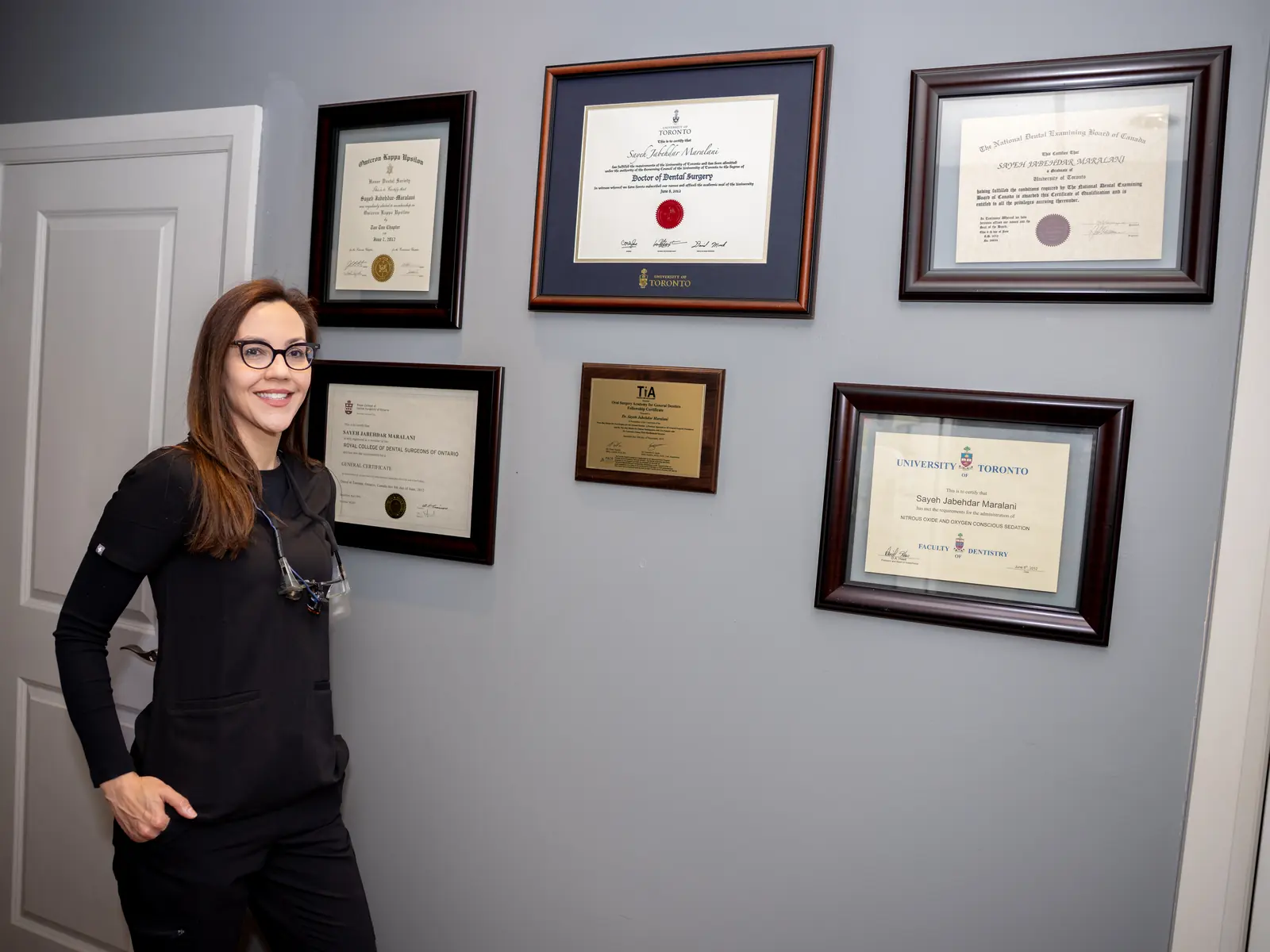
General information only; not a substitute for an exam. Reviewed by Dr. Sayeh Maralani, DDS, general dentist. Last updated 2026-11-03.
Book your family's next visit
New patients welcome. We check your coverage before treatment.